What's your geographical persona?
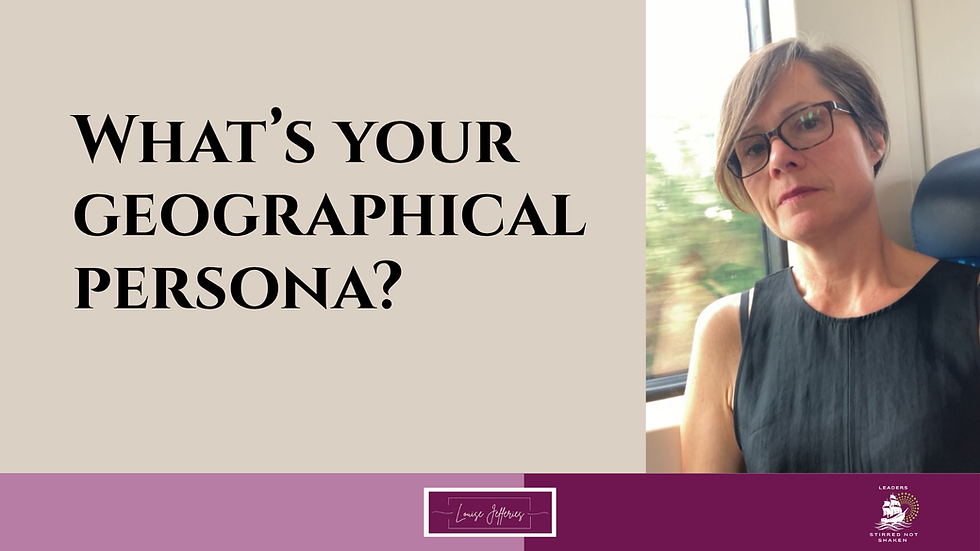
When you live and work outside of your home country there's a lot of additional processing that you're required to do on a daily basis. There 's a huge difference between visiting and actually living and working in a foreign land. The photo of me above was taken on my way to a networking event in Munich and looking at it, it doesn't show the whole me... it's the 'German approved' version of me.
What I've noticed living more than half my life outside my home country is that as a non-native speaker, you lose part of your personality in communication. Apart from the additional cognitive load of processing the language, culturally interactions are different. There have been many times where I've made a comment which in my home land would have likely increased connection with the person I was talking to, only for it to fall flat. I’ve also withheld saying something because I'm either uncertain of appropriateness or not quick enough with my vocabulary.
Over time my German persona has changed; I’m basically less me living here in Germany. Speaking personally, that's not a huge problem as my family are from the UK, so I can retain my sense of self when I'm home. I also have my own business and 90% of the work I do is in English so I can bring my whole self into my work most days. The places where I lose my authentic self and natural presence are typically in the other interactions throughout the day.
Many of my clients aren't as fortunate as me because they are navigating 3 or more different languages and cultures. The language and culture of their country or origin, the language and culture of their country of residence plus English for professional meetings, plus various other cultural differences such as the US, UK, Asia etc
Every language and culture jump we make takes us another step away from our core identity. Many Native English speakers have no idea the advantage they have in conversations, the natural authority that comes across in your language that even if what you're saying is wrong, your language, vocab and grammar is correct putting you at a psychological advantage. In contrast, you can have a experienced scientist, an expert in their field speaking about their topic in English in a country where English isn't the native language and at a certain subconscious level part of them will be doubting what they are saying is correct.
That makes a difference because when we listen to people speak we get a feeling of their confidence. What we don't get is understanding of where any confidence lack is coming from; from the topic or from the language.
Why am I raising this point? Because I get clients coming to me doubting their language skills despite having intermediate or upper intermediate level English, asking for help to speak with more confidence and more 'presence'. They believe that their language skills are failing them, but that's not what's going on. What's happening is that they're feeling less because they're not accessing all of themselves during communication. There is literally less of them in the room during meetings because they are trying to fit in and be like their peers. When that person doubts their language they speak with doubt in their voice, and with a slightly apologetic tone. They’re overthinking their language ability, fearful of making mistakes and we also feel it in their communication.
To speak with confidence and presence requires the ability to stay connected to the self and not self judge our performance. That self judgement is far more damaging in my opinion than any minor grammar mistakes or lost vocabulary could be.
I know what it's like to live and work outside of my home country, for the duration of that time I’ve worked with non-native speakers, many of which are doing a lot more processing than I am, processing 3 or more languages, so I understand the cognitive load to demands of them. I also know that it is possible to reconnect with that inner self and bring more of themselves, more presence into meetings and interactions... and the good news for those who aren't natural linguists, is that the answer isn't more language learning, it's more connection with self.
That process starts with redefining who you really are on the inside, what you values are, what triggers you, what inspires you, what makes you laugh, cry, get angry and feel free. It's about reminding yourself that you are enough, just as you are and then remembering and reconnecting with what authentic confidence or any other emotion feels and looks like to you. Not what other people look like when they are 'performing' confidence, but how you look, act and feel, when you embody confidence. Only when you know that can you start to 'be' like that in meetings and bring more presence into your work, your leadership meetings.
If this resonates with you book a consultation call with me to discuss the first steps to bringing more of yourself into your daily business communication.


Comments